

In school, Ghugni was my daily treat. The Ghugni vendor would arrive every day with a large pot full of this delicious yellow dish. Along with Ghugni, he would also carry Shalpata, disposable spoons, a special masala jar, tamarind water, and a plate of chopped green chillies and onions. When the bell rang for tiffin time, we would rush to get our regular portion of Ghugni. He would sit on the school floor, and a crowd would gather around him. The price was 50 paise for a half plate and 1 rupee for a full plate. He would leave with an empty pan within 15 minutes. Balancing Ghugni on a piece of Shalpata with a Shalpata spoon was a fun challenge. Those were the golden days.
Nevertheless, it’s one of the most desired street foods in Kolkata and Bengal. During the Durga Puja days, one can find at least one Ghugni stall among many other food stalls at Puja Pandals. And that was a tradition, without having Ghugni pandal hopping would considered incomplete for us. A non-vegetarian version Mangsher Ghugni (Dried Yellow Peas Curry with Mutton Keema) is also a popular option, but a good version of it is often rare to find.
Back home, my Mother used to cook this pretty often and it was a staple then. I’ve learned this from her. Ghugni can be served with luchi, paratha, roti, or enjoyed on its own. As it’s a popular food, the recipe varies a little bit from home to home. I’m sharing my version here, and I hope you’ll enjoy cooking it in your kitchen. 🙂

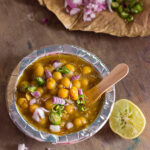
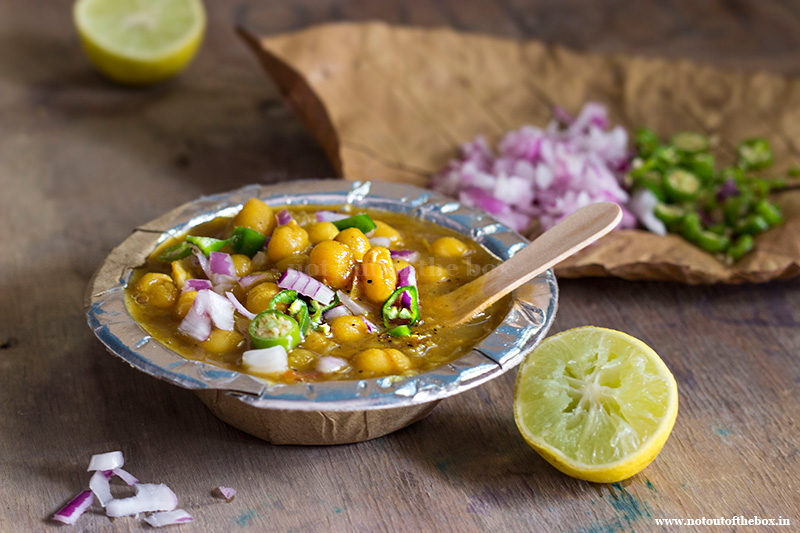
Ghugni/Dried Yellow Peas Curry
Ghugni is a popular street food in Kolkata and Bengal. Made with dried yellow peas, potatoes, and other spices this curried snack is a favourite of many.
Ingredients
- 1½ cups- Ghugni motor/Yellow dried peas
- 2- Potato (medium-sized)
- 2- Onion thinly sliced (medium-sized)
- 2- Tomato chopped (medium-sized)
- ½ tsp- Turmeric powder
- 1 tbsp- Cumin powder
- ¾ tsp- Garlic paste
- 1 tbsp- Ginger paste
- 1 tsp- Sugar
- Salt to taste
- ½ cup- Mustard oil
- ¼ tsp- Garam masala powder
- ½ tsp- Black pepper powder
- 3-4 Green chillies (slitted)
- 1 Lemon
For tempering
- 2- Bay leaf
- 2- Whole dry red chilli (halved)
- ½ tsp- Cumin seeds
Instructions
-
Soak Ghugni motor/Yellow dried peas in a generous amount of water for 5-6 hours.
-
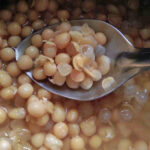
Add soaked yellow peas in a cooker. Pressure cook with enough water (water level should be 2″ high from the yellow peas). Check after 4-5 whistles. You need to cook the yellow peas with grains visible mostly and little mushy at the same time. So, adjust the whistles accordingly. Open the lid after pressure has reduced.
-
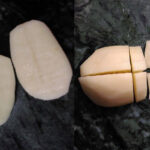
Peel the potatoes and cut lengthwise. Then cut each half lengthwise again, and cut the wedges into cubes. Wash well and keep aside.
-
Heat oil in a deep frying pan/kadai. Add cubed potatoes, fry over medium heat until golden in color. Remove and keep aside.
-
Now add the ingredients mentioned for tempering, sauté for a few seconds.
-
Add sliced onions, fry over medium heat until light brown in color. Next to add garlic paste, mix and sauté for few seconds.
-
Add chopped tomatoes, ginger paste, turmeric powder, cumin powder, and salt. Mix and fry over medium heat until the masala starts leaving oil.
-
Add boiled yellow peas, potatoes, and green chilies into this. Mix well and cook for 10 minutes over medium heat. Keep stirring in between to prevent burning from the bottom of the pan.
-
Now add ¾ cup of water into this. Mix well and cook over low heat until the potatoes are done. Keep stirring in between. Check salt, add sugar, black pepper powder, garam masala powder. Mix well and cook for 2 minutes more. Remove from the heat.
-
Serve hot. While serving garnish with chopped green chilies & onion, followed by a generous drizzle of lemon juice or tamarind water on top. Enjoy!
Recipe Notes
- The street vendors in Kolkata don’t use black pepper powder in Ghugni, they use red chilli powder. I prefer the flavour of black pepper powder over red chilli powder. You can use any of them as preferred, if you’re using red chilli powder add it while adding the other spices with tomatoes, as mentioned in the recipe.
- Drizzle tamarind water on top for the authentic street like taste.
- The consistency of Ghugni should be moderately thick, so, adjust water accordingly while cooking.
- Sometimes, my mother used to add fried coconut chips to Ghugni. Check this post to know-how.






Leave a Reply