

Bandhakopi is the Bengali term for cabbage, also known as Patta gobhi. While it used to be a seasonal vegetable available only during the winter months, we can now find quality cabbages in our markets throughout the year. A few days ago, while doing my regular grocery shopping, I came across some fresh cabbages at my local vegetable shop. I couldn’t remember the last time I had cooked cabbage because my husband doesn’t like this vegetable at all, so it has become a complete no-no in my kitchen. Although I enjoy cabbage and could cook it for myself, I prefer to share meals with someone. I can’t just cook for one person. Recently, I have been introducing my little one to a variety of vegetables and different foods as she grows up, ensuring that she gets to taste everything to develop her taste buds. This inspired me to make Bandhakopir Ghonto for the two of us.
The next day, I prepared this dish, and we thoroughly enjoyed our lunch together. We simply paired it with dal and rice; sometimes, simple food can satisfy the soul more than anything elaborate. Since this is a purely vegetarian dish (without onion and garlic, which some people consider non-vegetarian ingredients), not everyone includes garlic in their version of this sabji. However, my mother adds a little garlic when she cooks bandhakopi, and it enhances the flavour quite well. This is a common dish, so the recipe might vary from home to home. I’m sharing the way I love to prepare it for my family. 🙂


Bandhakopir Ghonto/Bengali style Cabbage Sabji
Bandhakopir Ghonto is a traditional Bengali vegetarian dish that pairs wonderfully with dal and rice. It is typically cooked without onion and garlic, but garlic can be added for an extra punch.
Ingredients
- 2- Cabbages (small, medium-sized)
- 2- Potatoes (medium-sized )
- 1 tsp- Garlic paste (optional)
- 1 tbsp- Ginger paste
- 3- Green chillies (halved)
- ¼ cup- Peas
- 1 tbsp- Cumin powder
- 1 tsp- Coriander powder
- ½ tsp- Turmeric powder
- ½ tsp- Kashmiri mirch powder
- Salt to taste
- ¼ tsp- Garam masala powder
- 1 tbsp- Sugar
- Mustard oil
- 1 tsp- Fresh coriander leaves (chopped)
For tempering
- 2- Bay leaves/Tej pata
- ½ tsp- Cumin seeds
- 1-2- Whole dry red chili (halved)
Instructions
-
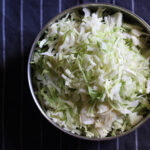
Thoroughly wash the cabbages. Cut each cabbage lengthwise into four equal pieces, then thinly slice each piece and set them aside.
-
Peel the potatoes and cut into cubes. Wash and keep aside.

-
In a large, deep-bottomed pan or kadai, add the sliced cabbage along with enough water to cover it. Bring the water to a quick boil over high heat, and then drain the cabbage using a strainer. Allow the cabbage to sit in the strainer for 10-15 minutes to let any excess water drain out. This step is optional but recommended, as it aids in the digestion of the vegetable. Our family has a history of experiencing bloating after consuming cabbage, so following this blanching step has always been helpful.
-
Heat ¼ cup oil in a kadai/deep frying pan. Add the cubed potatoes, shallow fry them over medium heat until golden brown in colour. Remove from the heat and keep them aside.
-
Temper with all the ingredients mentioned For tempering.
-
Next, add garlic paste (if using), sauté for a few seconds. Add cumin powder, coriander powder, turmeric powder and ginger paste. Mix and stir quickly for a few seconds.
-
Now, add sliced cabbages, green chillies, potatoes, peas, salt, and kashmiri mirch powder. Mix well; cover and cook over medium heat with lid on. Stir occasionally to prevent sticking, and cook until the vegetables are done. If the sabji starts to dry out too much, sprinkle in a little water.
-
Towards the end of cooking, add sugar, garam masala powder, and chopped coriander leaves. Mix well and cook uncovered for an additional 2-3 minutes. Your delicious Bandhakopir Ghonto is now ready to be devoured; transfer the sabji to a bowl.
-
Serve hot as a side dish with dal-rice, roti, etc.





Leave a Reply