

Teasel gourd (Kakrol in Bengali) is a seasonal vegetable, and it can be quite difficult to find fresh teasel gourd here in North India. Often, vendors dip them in artificial coloring to give them a fresh green appearance, which is harmful to our health. Fortunately, I found some good-quality teasel gourd at my local farmer’s market a few days ago and decided to buy them. With the gourd in hand, I made one of my favorite dishes, Kakrol er Purbhaja. This is a family recipe that I learned from my mother. The frying part of the process can be a bit tricky, but overall, the recipe is quite simple. With a little effort, you too can prepare this delicious dish, which then can be enjoyed with steamed rice.

Kakrol er Purbhaja/Stuffed Teasel Gourd
Ingredients
- Kakrol/ Teasel Gourd – 5 (scrap the skin of the kakrol gently to remove the hard areas . Cut small portions off from both the ends, now half them vertically. This way you will get 2 equal pieces from each kakrol.)
- Poppy seeds for paste- 3 tsp (wash and grind poppy seeds in a mixer grinder/food processor with 1-2 green chillies and water. The paste will be thick, not watery. So stop the mixer in-between and keep adding little amount of water. Keep blending until a smooth paste forms)
- Grated coconut- 3-4 tbsp
- Salt to taste
- Vegetable oil
Method
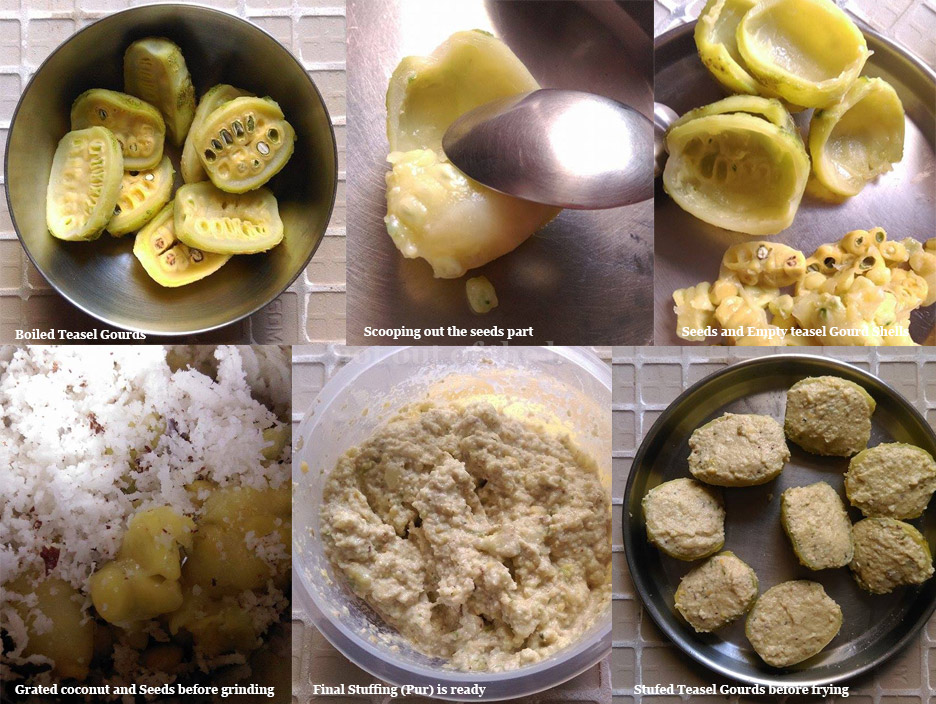
Wash and boil the teasel gourds till the seeds part turns soft, don’t over boil, so check in between while boiling. Remove from the heat and keep aside, let them cool. Now with the help of a teaspoon gently scoop out the seeds and flesh.
Blend this kakrol seeds and flesh part with grated coconut and one green chilli to a fine paste using a mixer. Now add poppy seeds paste and salt into this, mix well. The stuffing is ready, now with a teaspoon fill this mixture into the empty teasel gourds shells. Keep them aside.
Heat oil in a deep frying pan (use a nonstick for easy frying). Gently place the teasel gourds in the hot oil, with the stuffed side down.

Fry the stuffed kakrol over medium heat until the edges start to turn golden brown. Using a spatula, gently lift the kakrol to check the colour of the cooked side. Once the cooked side is golden brown, flip the kakrol over. Fry the other side until it develops a very light brown colour. Then, remove it from the heat and transfer to a bowl.
Kakrol er Purbhaja is ready, serve this with rice and dal, or with plain steamed rice.
Notes:
The traditional way of enjoying Purbhaja is to mash each piece with some steamed rice using your fingers, mix well and then eat.
How to fix thinner Posto Bata for this recipe?
In modern cooking, we often use a mixer grinder to prepare posto instead of the traditional shil nora. As a result, the posto bata can end up being thinner in consistency. This typically happens when we accidentally add more water than needed or wonder how to achieve the desired consistency with less water in a mixer.
From my experience cooking this dish, I’ve found that adding a little Chana Sattu (Cholar Chatu) to the filling works wonders. It helps correct the consistency by adding substance without altering the original taste of the recipe. After tasting this version of Kakroler Pur Bhaja, it’s hard to tell that it contains Chana Sattu.
While this approach may not be traditional, it effectively addresses the issue of a thin posto bata. Just be cautious not to add too much Chana Sattu, as it tends to dry out when cooked. Overdoing it can lead to a filling that is too dry and affects the overall eating experience. I hope you find this tip useful!
Kakroler Purbhaja Recipe Video





Leave a Reply