

Kochupata Chingri is one of those traditional Bengali dishes that I grew up eating. I vividly remember how my mother would collect fresh taro leaves from the backyard of our Kolkata home to make this dish, especially during the monsoon when the leaves were abundant. Those tender leaves would make this dish taste so much better every time Ma would prepare it. The subtle taste of fresh Kochupata, combined with a freshly ground spice paste, creates layers of flavour that are distinctly Bengali—simple, without strong spices, yet incredibly hearty. This dish is nostalgic for me and always reminds me of home. We would often end up overeating rice whenever it was served, as it paired perfectly with the dish. It tastes heavenly with rice; words will fall short to describe the experience. If you haven’t tried this dish before, you must make it this monsoon! 🙂
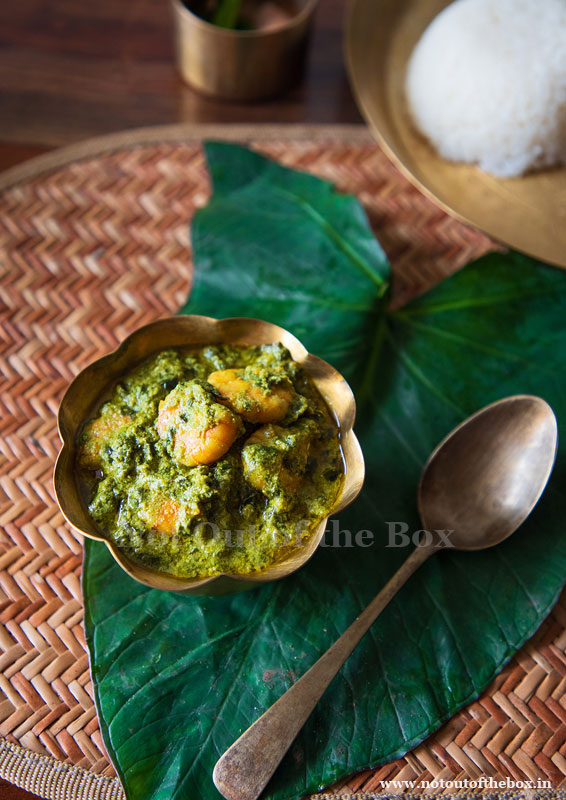
Kochupata Chingri / Prawns with Taro Leaves
A traditional monsoon dish, Kochupata Chingri is a delicious and hearty preparation that uses tender taro leaves, prawns, and coconut as main ingredients. A Bengali delicacy, it is best enjoyed with rice.
Ingredients
- 160g / 2 bunches- Kochu pata / Fresh taro leaves
- 200g- Prawns (medium-sized)
- 3 tbsp- Poppy seeds paste
- 1½ tbsp- Mustard seeds paste
- ⅓ cup- Fresh grated coconut
- 4- Green chillies (halved)
- Salt to taste
- As required- Turmeric powder
- As required- Mustard oil
- ¼ tsp- Nigella seeds/Kalojire/Kalonji
- ½ tsp- Sugar
Instructions
Preparing the Spice pastes
-
You can prepare the poppy seeds paste and the mustard seeds paste separately for this recipe, or they can be made together in a food processor.
-
For the poppy seeds paste, rinse 1½ tbsp poppy seeds under running water in a strainer, and keep aside for some time.
-
For the mustard seeds paste, rinse ½ tbsp each of black and yellow mustard seeds under running water in a strainer, and set aside.
-
In a mixer-grinder, combine the washed poppy seeds, mustard seeds, green chillies, and a bit of water. Blend until a smooth paste forms, stopping to add more water if necessary.
-
Add the grated coconut to the paste and mix again. Keep this spice paste aside for later use.
-
You can also use store-bought mustard powder instead of mustard seeds paste for this recipe. If using mustard powder, follow the package instructions for dissolving.
Preparing the Taro leaves
-
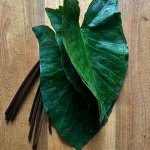
Remove the stems from the fresh taro leaves and wash them thoroughly under running water.
-
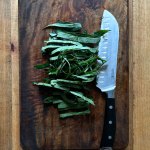
Stack the leaves together to form a roll, then cut the rolled leaves into thin strips. Alternatively, you can chop them roughly if you prefer.
-
Transfer the freshly chopped leaves to a deep-bottomed pan or kadai, add some water, and cook over medium-low heat until they become coarsely soft and mushy.
-
Turn off the heat, transfer the cooked taro leaves to a bowl, and discard the boiling water.
Preparing the Prawns
-
In a bowl mix the prawns with ½ tsp of turmeric powder and ½ tsp of salt, keep aside.
-
Heat ½ cup mustard oil in a deep frying pan/Kadai. Add the prawns and sauté for 2 minutes over medium heat, remove from the heat and keep aside.
Making of Kochupata Chingri
-
Temper the nigella seeds in the remaining oil. There should be 2 tbsp of oil in the kadai; if not, add some more at this stage.
-
Add the cooked taro leaves, salt, and ½ tsp of turmeric powder. Mix well and cook over medium heat for 4 to 5 minutes, stirring occasionally.
-
Next, add the spice paste, mix well, and cook for 3-4 minutes.
-
Add the sautéed prawns and ½ cup water, mix well, cover, and cook for 15 minutes over low heat, stirring occasionally.
-
The gravy will thicken during this time, and oil will float on top.
-
Add the sugar towards the end of cooking and continue to cook uncovered for an additional 2 to 3 minutes.
-
Turn off the heat and drizzle some mustard oil over the dish.
-
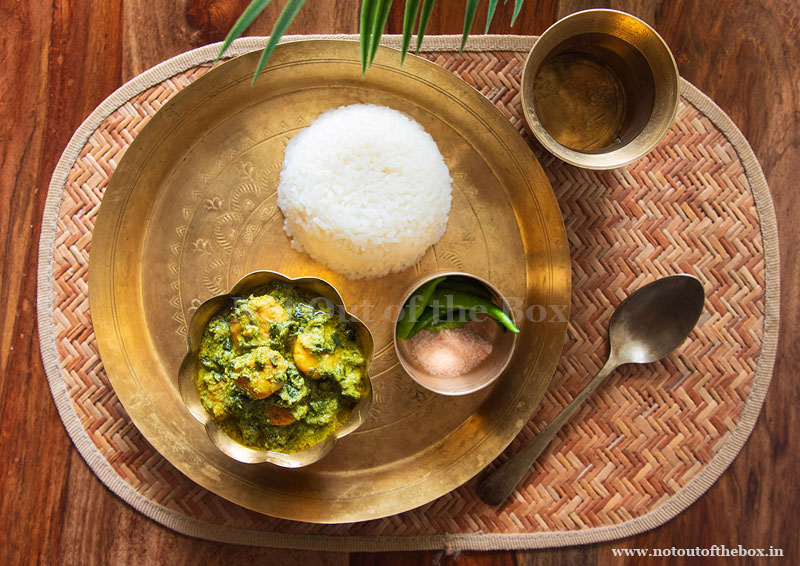
Transfer the delicious Kochupata Chingri to a bowl, serve it hot with steamed rice, and enjoy!





Leave a Reply