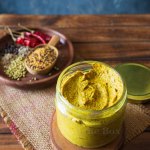
Instant Kasundi / Bengali Mustard Sauce
Make Bengal's beloved mustard sauce, Kasundi, with this quick recipe. This versatile condiment pairs well with nearly every dish you enjoy.
Ingredients
- ½ cup / 80g- Mustard seeds
- ½ cup + 1 tbsp /100ml- Water (read notes)
- 1 tsp- Salt
- 1 tsp- Turmeric powder
- 2 tbsp + 1 tsp- White vinegar (read notes)
For acacia gum powder mixture (optional, but recommended, read notes)
- 1 tsp- Acacia gum / powdered Gond
- 2 tbsp- Hot water
Roasted spices
- 3- Whole dry red chillies
- 1 tsp- Whole black peppercorns
- 1 tsp- Cumin seeds
- 1 tsp- Coriander seeds
- ¼ tsp- Ajwain/Carom seeds
Instructions
-
Use a mix of yellow and black mustard seeds. Measure equal amounts of both varieties and place the seeds in a strainer. Rinse them under running water, then set the strainer aside to let the excess water drain off.
-
Next, spread the washed seeds on a plate and allow them to dry completely at room temperature. This process may take a few hours, so you can also complete this step a day before making the Kasundi.
-
In a frying pan dry fry/roast the spices over low-medium heat for 2-3 minutes, or until fragrant and one shade darker in colour. Keep aside to cool completely before grinding.
-
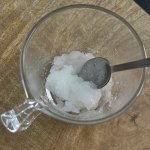
Boil some water in a pan, and once it reaches a rolling boil, turn off the heat. Allow the water to cool for a few minutes. Next, measure 2 tablespoons of the hot water into a cup and mix in the acacia powder. This will quickly transform into a thick, gel-like mixture, which is normal. Set this mixture aside for later use.
-
In a food processor / mixer grinder add the mustard seeds, salt, turmeric powder, and roasted spices, blitz without any water until a coarse mixture forms.
-
Next, add vinegar, water, and acacia powder mixture to the food processor and blitz until you achieve a smooth and moderately thick consistency for the Kasundi. For this step, add the previously boiled water. You must use boiled water only to prepare Kasundi, but it needs to be at room temperature.
I prefer my homemade Kasundi to be thicker because I use it not just as a dipping sauce or condiment, but also as an ingredient in various dishes, such as Dhone Kasundi Mach, Begun Basanti, and in sandwiches and salad dressings, as well as raita. With a bit of creativity, Kasundi can play a versatile role in your kitchen. Continue exploring the options by making a batch, and use it as many ways as possible.
-
Store the Kasundi in the refrigerator, and it can be used for several months.
Recipe Notes
- I prefer to use good quality, naturally brewed white vinegar in my recipes instead of synthetic white vinegar.
- The amount of water in the recipe can be increased to make a pourable version of Kasundi. If you add more water, adjust the salt accordingly.
- Acacia gum powder works as a natural stabilizer and improves the texture when you intend to make a quicker version of Kasundi. You can leave this ingredient, if you don’t have it or prefer not to use it, omitting this ingredient will not affect the overall taste of Kasundi.
- In my recipes, I use 225 ml cups. 1 cup = 225ml.